
One of the most common critiques of modern evangelical Christianity, heard both from scholars like N. T. Wright and from Latter-day Saints, is that modern Christians are too focused on being in heaven with God and not focused enough on the resurrection and the new heavens and the new earth.
This critique, especially from Wright, can provide a valuable corrective. Christians should not lose sight of the resurrection, the renewal of creation, and the hope described in Revelation of God dwelling with humanity forever in the new heavens and the new earth. The final hope of Christianity is not simply that disembodied souls go to heaven; it is that God will make all things new, raise the dead, and restore creation.
However, I also think this critique can sometimes go too far and unintentionally minimize another profound and radical aspect of Christian hope: the reality that believers are immediately with Christ after death.
Recently, in light of Christopher Nolan’s new film about The Odyssey, I have been reading Homer’s original work. One thing that stood out to me was the deeply negative depiction in Homer and classical Greek thought of the state of the dead in Hades. The shades of the underworld are portrayed as diminished versions of the people they once were—lacking the fullness of life, lacking true enjoyment, and existing in a shadowy state. For instance, Achilles famously tells Odysseus that he would rather be a servant among the living than a ruler among the dead.
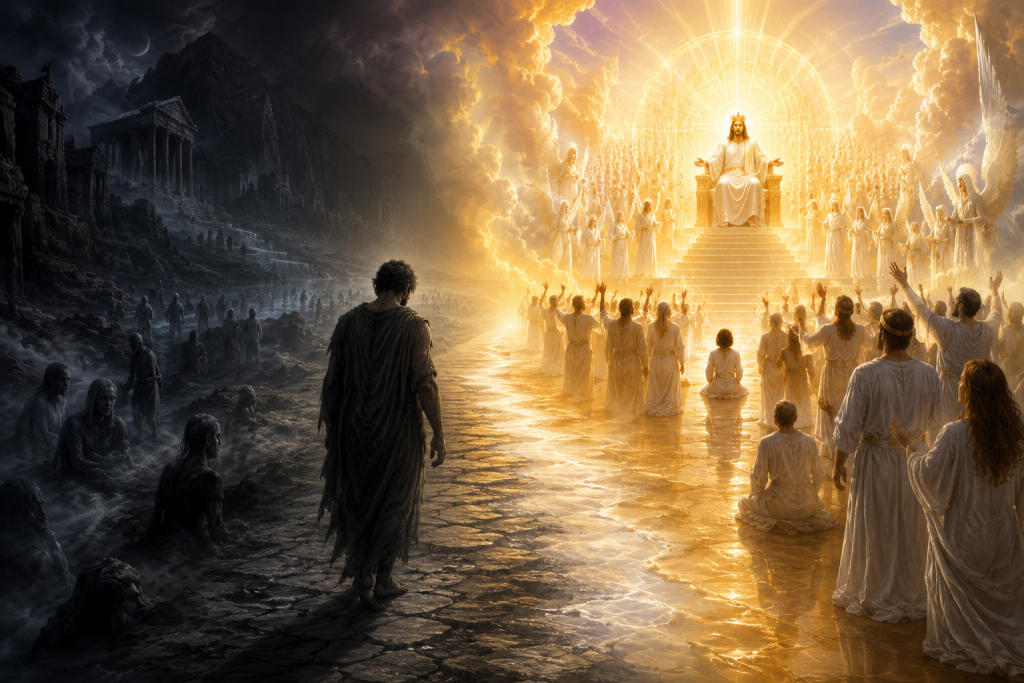
This Greek view of the afterlife reflects a broader ancient understanding of death as a diminished state of existence. In some Old Testament passages, a similar picture appears in descriptions of Sheol. Ecclesiastes speaks of the dead as no longer participating in the activities of life, and the Psalms sometimes portray Sheol as a place where there is no remembrance of God or participation in his worship. Death was not necessarily portrayed as a place of torment, but it was often portrayed as a place of silence, separation, and loss.
Against that background, one of the most radical claims of Christianity is not only its teaching about the future resurrection, but its teaching about what happens to believers at the moment of death. Through Christ, death itself has been transformed. Jesus has not only secured the future resurrection; he has changed the present reality of death for those who belong to him. As the author of Hebrews explains, Jesus “through his death” broke “the power of him who holds the power of death–that is the devil” to “free those who all their lives were held in slavery by their fear of death. (Heb 2:14-15).
This is why Paul can say, “My desire is to depart and be with Christ, for that is far better.” (Phil 1:23). Paul does not imagine that death will place him in a shadowy realm distant from God. He believes that when he dies, he will immediately enter the presence of Christ. In another place, he says that “to be away from the body is to be present with the Lord.” (2 Cor 5:8).
That is a radical Christian hope. The believer does not enter death as a diminished shade among the dead, but as someone welcomed into the presence of God. The state of the dead has been transformed from one of separation and sorrow into one of communion, joy, and worship. Death has truly lost its sting.
This same hope is reflected in the vision given to John in the book of Revelation. John sees the souls of those who had been martyred for their faith and finds them not in a state of separation, silence, or diminished existence, but in the presence of God. They are before the throne, worshiping God alongside the heavenly beings and awaiting the final fulfillment of God’s promises.
John does not portray the dead who have died in Christ as distant from God or as existing in a shadowy state like the shades of the ancient world. Instead, he presents them as conscious members of the heavenly community, participating in worship along with angels and heavenly beings. They are enjoying the presence of God even as they await the resurrection and the final renewal of all things.
This is one of the reasons early Christians could face persecution and martyrdom with such confidence. They were not merely looking forward to a future resurrection someday; they trusted that death itself could not separate them from Christ. To die was gain because it meant being with the Lord immediately and not just at a future resurrection day.
At the same time, Christians must not lose sight of the resurrection. Being with Christ after death is not the final chapter. The ultimate hope remains the resurrection of the body, the defeat of death, and the new heavens and new earth where God will dwell with his people forever.
Christian hope, then, is not either heaven or the new creation. It is both. Because of Christ, believers can look forward both to the immediate joy of being with him after death and to the final day when all things will be made new.